
2026-09-30 15:09:19
EPDM Suction Hose Manufacturer – Black Weather Resistant
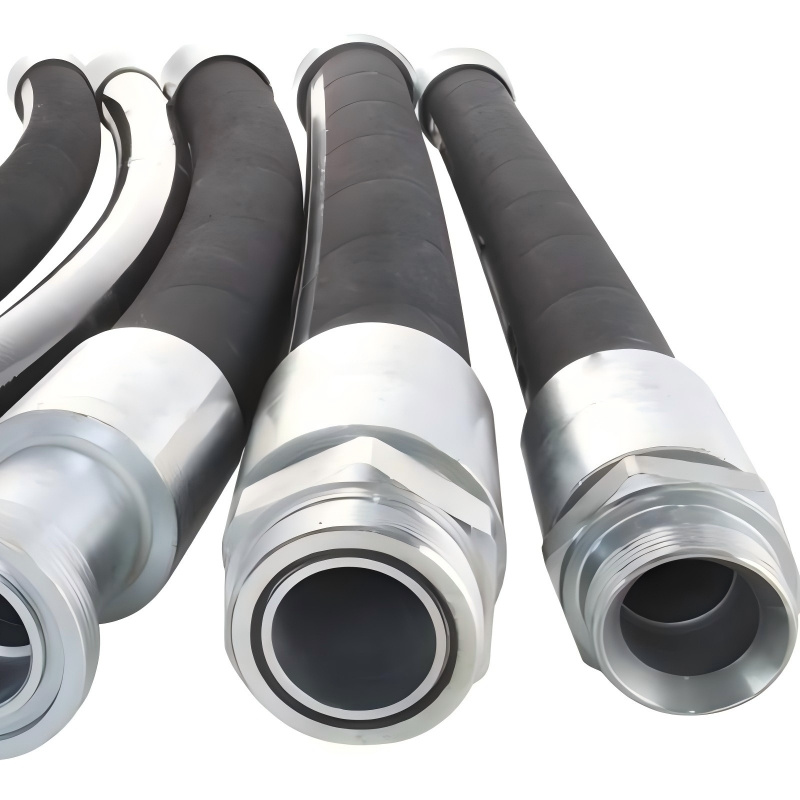
DN100 EPDM suction and discharge pipe is a type of large-diameter flexible pipeline product with EPDM rubber as the main material and a nominal inner diameter of 100mm. It has both suction and discharge functions and is suitable for industrial water treatment, mining drainage, municipal dredging, agricultural irrigation, and chemical medium transportation. The technical meaning of dual-use suction and discharge is that the hose can withstand external atmospheric pressure without collapsing under negative pressure conditions, and can withstand internal fluid pressure without breaking under positive pressure conditions.
The design difficulty of large-diameter suction and discharge pipes lies in balancing three interdependent properties: anti negative pressure rigidity, anti positive pressure strength, and bending flexibility. The reinforcement layer structure needs to provide sufficient radial support to resist negative pressure collapse, while also having sufficient circumferential strength to withstand positive pressure. However, the increase in rigidity of the reinforcement layer will weaken the flexibility of the pipe body, affecting the convenience of installation and movement. The selection of EPDM material is mainly based on its excellent weather resistance, water resistance, and chemical corrosion resistance.
2、 Structural design and material composition
Inner layer (inner adhesive layer): EPDM is the main material, with a thickness usually between 3mm and 6mm. The saturated carbon chain of EPDM molecular structure endows it with excellent heat aging resistance, water resistance, and ozone resistance. For conveying media containing solid particles (such as mud, sand water mixtures), wear-resistant fillers need to be added to the inner layer rubber formula to enhance its resistance to erosion and wear. The inner surface is smooth to reduce fluid resistance and prevent medium adhesion and deposition.
Enhancement layer: The reinforcement structure of large-diameter suction and discharge pipes needs to meet both negative pressure and positive pressure resistance requirements. Common forms of reinforcement include: high-strength synthetic fiber weaving or winding layers, providing circumferential and axial strength; Spiral steel wire skeleton layer, embedded in the pipe wall to provide radial support and resist pipe collapse under negative pressure. Spiral steel wire is usually made of galvanized or coated steel wire to prevent corrosion. The number of layers and structure of the reinforcement layer are determined based on the working pressure and negative pressure level.
Outer layer (outer rubber layer): made of EPDM or chloroprene rubber as the main material, with a thickness usually ranging from 2mm to 4mm. The outer layer should have wear resistance, weather aging resistance, ozone resistance, and UV resistance. For wear and tear conditions such as mines and construction sites, the outer adhesive layer can be increased in thickness or wear-resistant formulas can be used. The outer surface usually has identification bands along the length direction.
End connection: The end connection methods for large-diameter suction and discharge pipes include flange connection, quick connector, and clamp connection. Flange connections are suitable for fixed pipeline systems, quick couplings are suitable for mobile equipment that requires frequent disassembly, and clamp connections are suitable for low-pressure conditions.
3、 Core performance parameters
Inner diameter specification: DN100 (approximately 4 inches), suitable for standard interfaces of mine drainage pumps, sand pumps, mud pumps, and industrial water treatment systems.
Work pressure: Depending on the structure of the reinforcement layer, the work pressure is usually in the range of 0.5 MPa to 1.5 MPa. The blasting pressure shall not be less than 3 to 4 times the working pressure.
Negative pressure performance: The suction and discharge tube should maintain its body from collapsing under negative pressure conditions. The anti negative pressure capability of typical products ranges from -0.08MPa to -0.1MPa (approximately -80kPa to -100kPa).
Temperature range: The working temperature of EPDM material covers -40 ℃ to+100 ℃, and some products can be extended to+120 ℃.
Minimum bending radius: Depending on the pipe diameter and reinforcement structure, the minimum bending radius of DN100 suction and discharge pipes is usually in the range of 500mm to 800mm.
Wear resistance: The wear resistance of the inner layer rubber material is characterized by Akron wear or DIN wear. The wear of high-quality products is controlled at a low level to adapt to long-term erosion of sand containing media.
Chemical corrosion resistance: EPDM has good resistance to water, acid alkali salt solutions, and various chemical media. The tolerance to mineral oil and aromatic hydrocarbon solvents is limited, and the compatibility of the medium needs to be confirmed when selecting.
4、 Key technical points for dual-use suction and discharge
Stability of the tube under negative pressure conditions: Under suction conditions, the pressure inside the tube is lower than the external atmospheric pressure, and the tube is subjected to external pressure. The radial support effect of the spiral steel wire skeleton layer is the key to resisting negative pressure collapse. When selecting, it is necessary to confirm that the anti negative pressure capability of the product covers the actual vacuum degree under suction conditions.
Pressure bearing capacity under positive pressure conditions: Under discharge conditions, the fluid pressure inside the pipe acts on the pipe wall, and the woven or wrapped reinforcement layer provides circumferential strength. When selecting, it is necessary to confirm that the working pressure covers the discharge pressure of the system.
Medium erosion and wear: The medium containing solid particles causes erosion and wear on the pipe wall during high-speed flow, especially in the bent pipe and near the joints. The wear resistance of the inner layer rubber material and the reasonable design of the bending radius of the pipe body can help extend its service life.
Installation and support: Large diameter suction and discharge pipes should be installed with reasonable support spacing to prevent excessive sagging of the pipe body due to self weight and medium weight. The layout of the suction pipeline should avoid the accumulation of gas at high points and the formation of gas resistance, while the layout of the discharge pipeline should avoid the accumulation of liquid at low points.
5、 Application scenarios
Mine drainage: used for flexible connection between pumps and drainage pipelines in mine water discharge systems. The water resistance and wear resistance of EPDM are suitable for mine water conditions containing rock powder and coal powder.
River dredging: used for the suction and discharge pipelines of dredging ships and mud pumps to transport mud water mixtures with high sand content.
Municipal drainage: Used for the suction and drainage pipelines of mobile pumping stations in urban flood control and drainage systems.
Industrial water treatment: used for connecting the inlet and outlet of water pumps in sewage treatment plants, waterworks, and industrial circulating water systems.
Agricultural irrigation: Water pump suction pipes and water supply pipelines used in large-scale irrigation systems.
Chemical medium transportation: Used for transporting acid-base salt solutions and mild chemical media in suction and discharge pipelines, it is necessary to confirm the compatibility of EPDM with specific media.

Leave a Comment