
2026-06-25 09:38:15
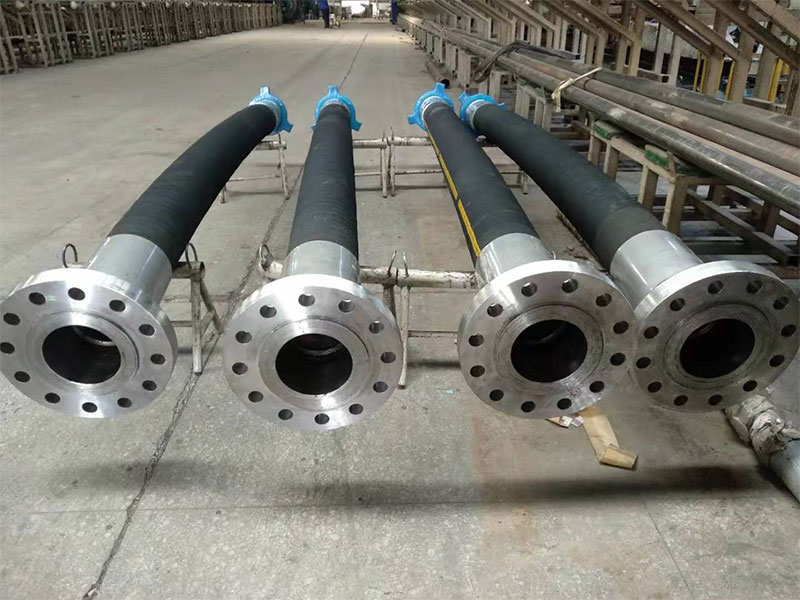
Oilfield Acid Fracturing Hose High Pressure Rubber Frac Hose for Well Completion
The use of high-pressure fracturing hoses is particularly critical in modern oil drilling and production technology. These hoses not only bear the responsibility of transporting various fluids, but also play an indispensable role in ensuring operational safety and efficiency. This article will delve into the composition of high-pressure fracturing hoses, with a particular focus on the application of flange joints and their impact on oil drilling and production.
1、 Construction of High Pressure Fracturing Hose
High pressure fracturing hoses are usually composed of multiple layers of materials, mainly including an inner lining layer, a reinforcement layer, and an outer layer. The inner lining layer is generally made of oil resistant rubber to prevent corrosion of the transported oil, natural gas, and other fluids. The function of the reinforcement layer is to enhance the compressive strength and bending resistance of the hose. It is usually made by interlacing steel wires or synthetic fibers. This layer can not only withstand pressures of up to thousands of pounds, but also effectively prevent hose rupture during high-intensity operations.
The outer layer is mainly used to protect the inner lining and reinforcement layer from external environmental influences, usually using wear-resistant and weather resistant materials. In order to improve the adaptability of hoses in complex environments, many high-pressure fracturing hoses are also equipped with different protective coatings to enhance their corrosion resistance and UV resistance.
2、 The importance of flange joints
The selection of joints is extremely important in high-pressure fracturing hose systems. As a very commonly used type of joint, the flange joint is widely selected due to its excellent sealing and anti vibration ability. The flange joint is usually made of high-strength metal, which can firmly connect in high-pressure environments and prevent oil or gas leakage caused by excessive pressure.
1. Structure of flange joint
The structural design of flange joints is very complex, usually consisting of multiple parts such as flanges, bolts, sealing rings, etc. The shape of the flange can be made into various specifications through different manufacturing processes to ensure good matching with hoses and equipment. When connecting, the flange joint is fixed by bolts, which ensures the stability of the connection and facilitates disassembly.
The sealing ring, as a key component, determines the sealing performance of the joint under high pressure. In general, sealing rings are made of materials such as fluororubber, which have excellent oil and temperature resistance and can effectively reduce losses caused by fluid leakage.
2. Application in high-pressure fracturing operations
In actual high-pressure fracturing operations, the reliability of the flange joint is directly related to the safety and efficiency of the operation. When the high-pressure fluid generated by drilling equipment is transmitted to the formation through a hose system, the joint must be able to withstand enormous pressure. The flange joint demonstrates its excellent load-bearing capacity in this situation, enabling the smooth and efficient transportation of oil and gas wastewater to the target formation.
At the same time, the sealing performance of the flange joint is also crucial. Leakage not only causes material waste, but may also pose safety hazards. Therefore, choosing high-quality flange joints is particularly urgent for achieving safe and efficient fracturing operations.
3、 The application industry of high-pressure fracturing hoses
High pressure fracturing hoses and related components are widely used in petroleum, natural gas, chemical, mining, and many other industrial fields. Fracturing technology is widely used in the process of oil drilling to increase the production of oil and gas wells. Through high-pressure fracturing operations, fluids can create cracks in underground rock formations, enhancing their fluidity. The high-pressure fracturing hose is an important tool for achieving this process.
Similar technologies can also be applied in natural gas extraction. Through high-pressure fracturing, underground natural gas reservoirs can be effectively activated to facilitate efficient energy extraction. Similarly, the chemical industry is gradually adopting hydraulic fracturing technology to optimize production processes and improve the efficiency of raw material utilization.
4、 Precautions for choosing high-quality high-pressure fracturing hoses
1. Quality certification: When choosing high-pressure fracturing hoses, enterprises should carefully consider the quality certification of the products. Products that comply with international standards such as ISO usually mean higher safety and reliability.
2. Material selection: Suitable materials can significantly improve the service life and performance of hoses. For example, materials that are resistant to high temperatures and corrosion are crucial for high demand environments such as oil fields.
3. Manufacturer reputation: Choosing a manufacturer with good market reputation and product reputation can effectively avoid economic losses caused by product quality problems in the future.
4. After sales service: High quality after-sales service can help customers solve various technical problems during use, ensuring the smooth progress of operations. That's why choosing companies with good after-sales service not only values their products.
5、 Future Development Prospects
With the continuous advancement of technology and the increasing demand for energy, high-pressure fracturing hose and its joint technology will develop towards a more efficient, environmentally friendly, and durable direction. More advanced materials and design concepts will be continuously introduced, and in the future, it is expected to achieve higher pressure and safer fracturing operations.
At the same time, the industry's attention to environmental protection and safety is also increasing. In hydraulic fracturing operations, avoiding material leakage and reducing environmental impact have become important missions for major enterprises. Developing new materials and improving the sealing and durability of joints are the focus of future development, striving to reduce environmental pollution while ensuring operational efficiency.

Leave a Comment